
As these are important habitat areas and ecological restoration zones within The Cape, people are asked to refrain from entering the marked habitat areas unless authorised and observe any signage that is displayed.
Scroll down to follow the progress of the project chronologically.
The Background
Project KOALA started in February 2021 as a community initiative supported by The Cape Development Team to re-establish treed vegetation within the estate combined with an expansion of habitat for the small, local Strzelecki koala population of Cape Paterson.
The project engaged the services of local ecologists and liaised with Parks Victoria to determine existing tree species locations and boundaries with the bordering Yallock-Bulluk Marine and Coastal Park (YBMCP) from the re-vegetation strategy evolved.
Using the mini-forest principles of Japanese ecologist Miyawaki, a series of high density, layered plantings of mixed indigenous plant species are to be planted in ‘mini-forest’ stepping stone plots over a number of phases, linking the YBMCP in the south-east of The Cape to the main central creek line which runs north-south through the estate and a further east-west corridor toward Wilson Rd. See the aerial view of the mini-forest plot locations below.

Phase 1 – 12 mini-forest plots linking remnant Manna Gum stands
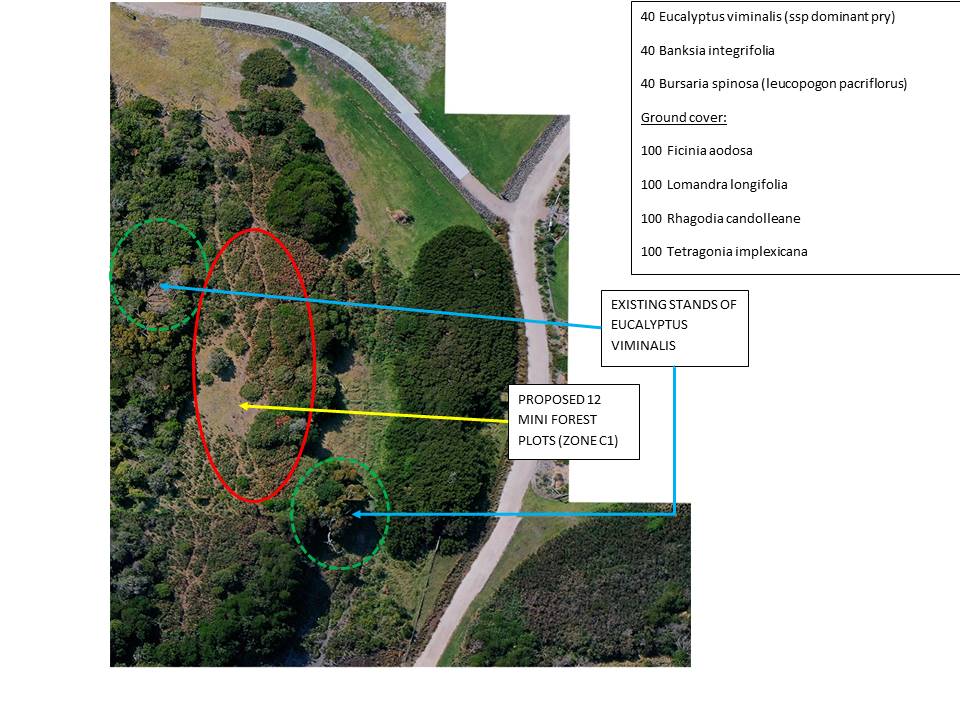
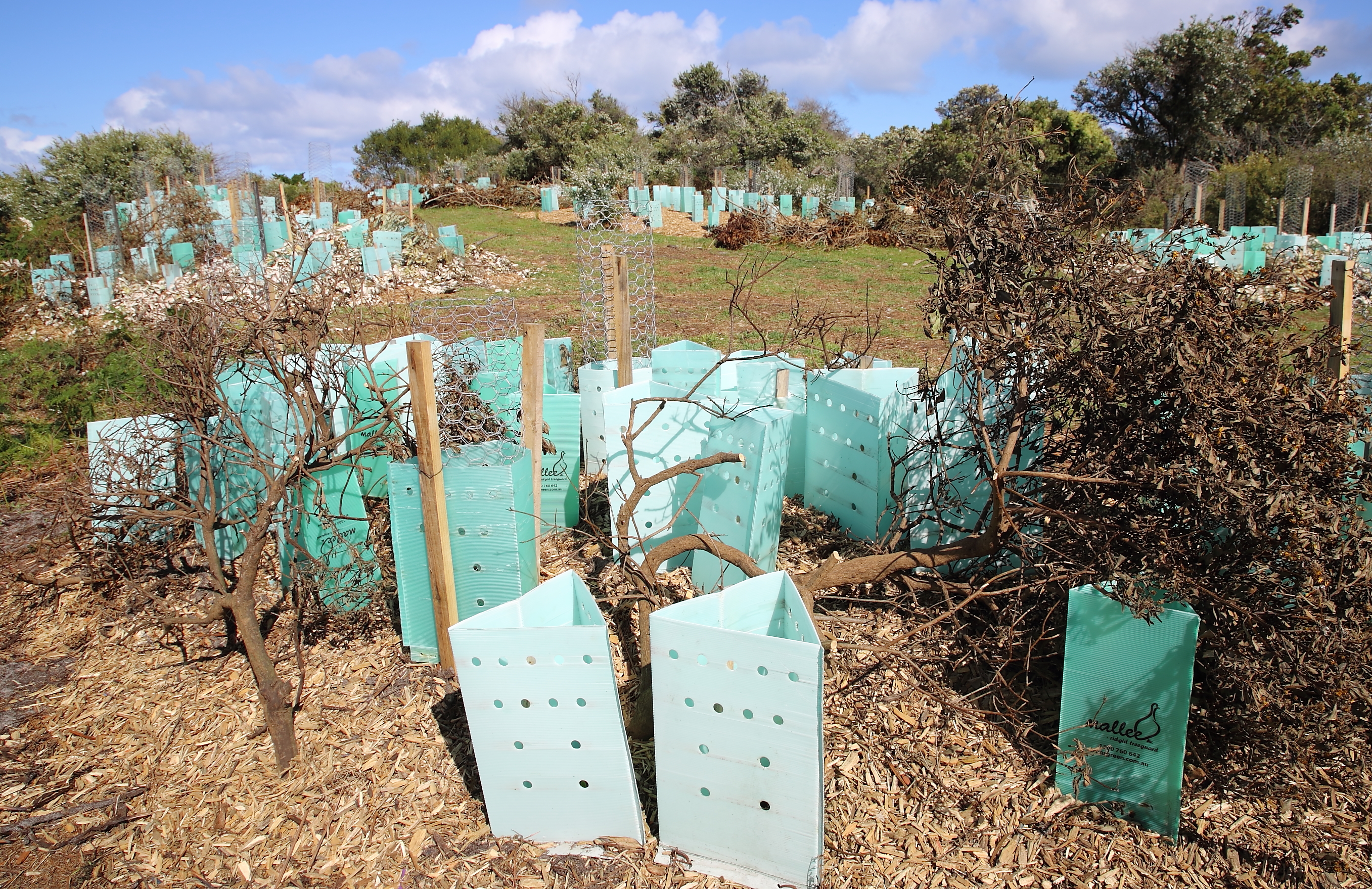
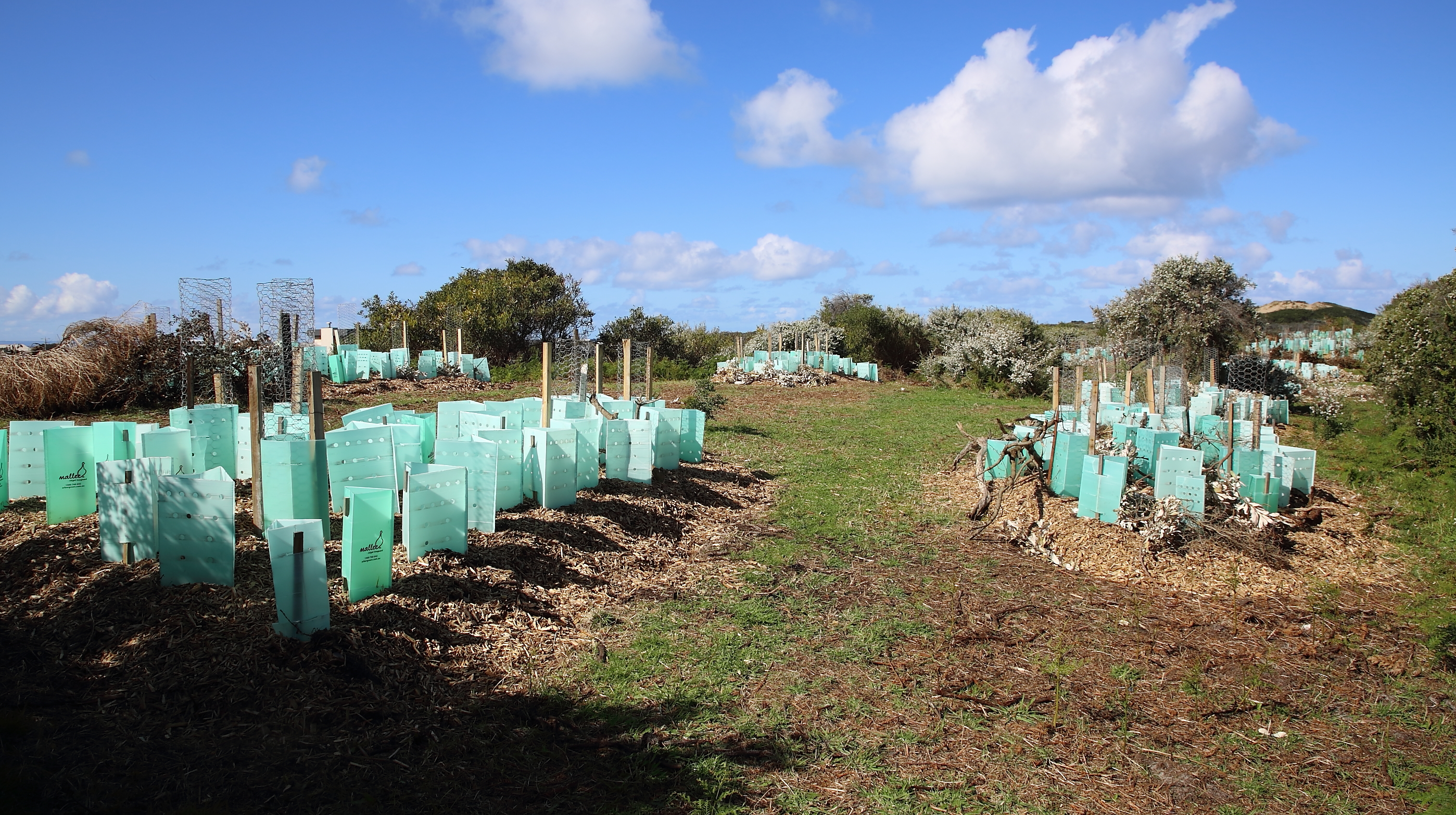
The Phase 1 pilot was completed in September 2021 (see aerial photo below). It created 12 stepping stone plots in an area on high ground to the west of the off-leash dog park, connecting two mature stands of Eucalyptus viminalis ssp pryoriana (Coastal Manna Gum). Some 600 plants (comprising 8 different species in four layers) were planted in 10 ‘mini-forest’ plots with two comparison plots. The plants were sourced from local seed stock from the Wonthaggi Seed Bank and Melaleuca Nursery.
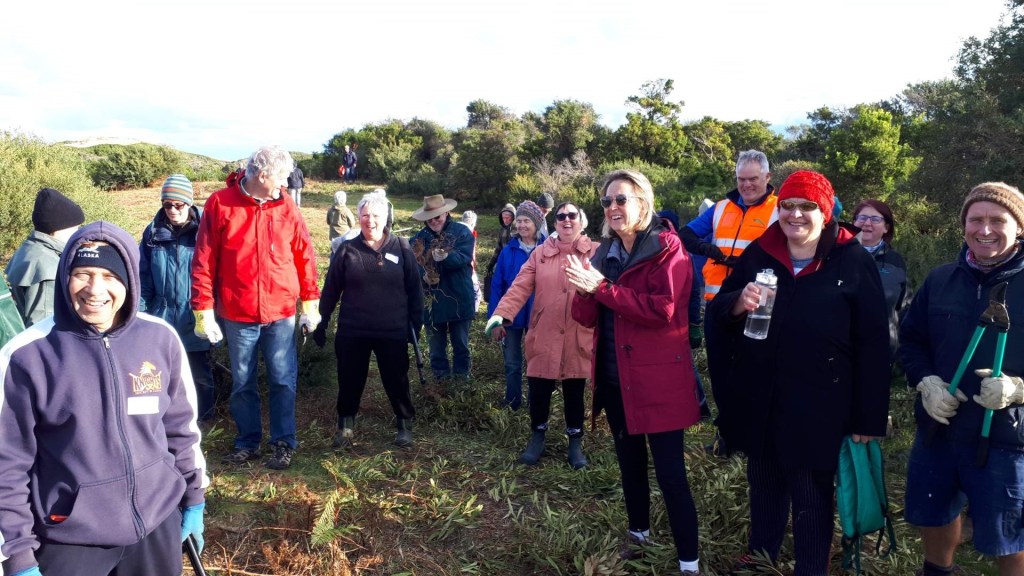
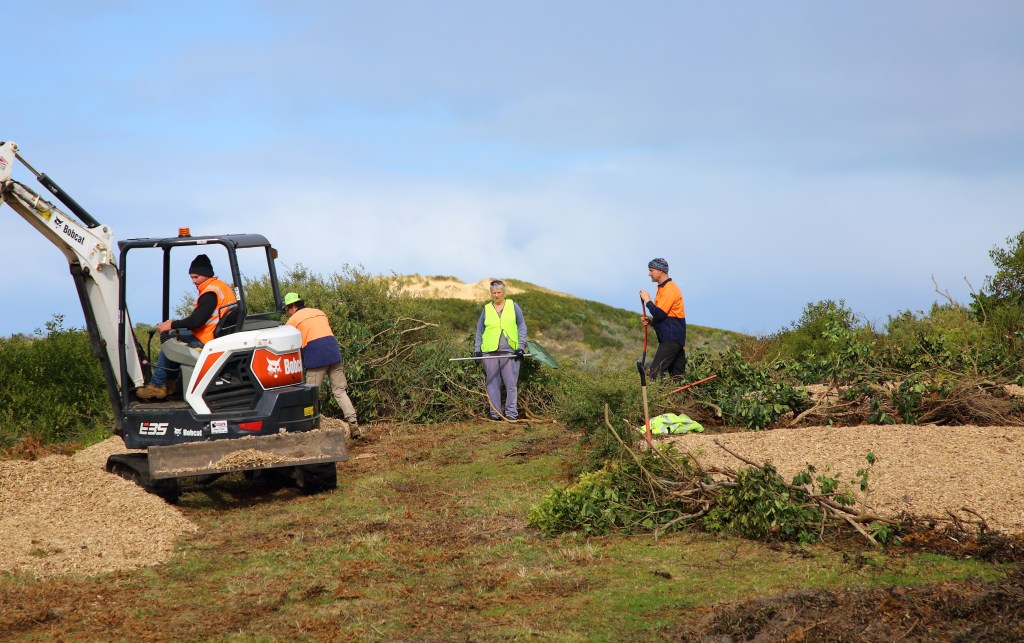
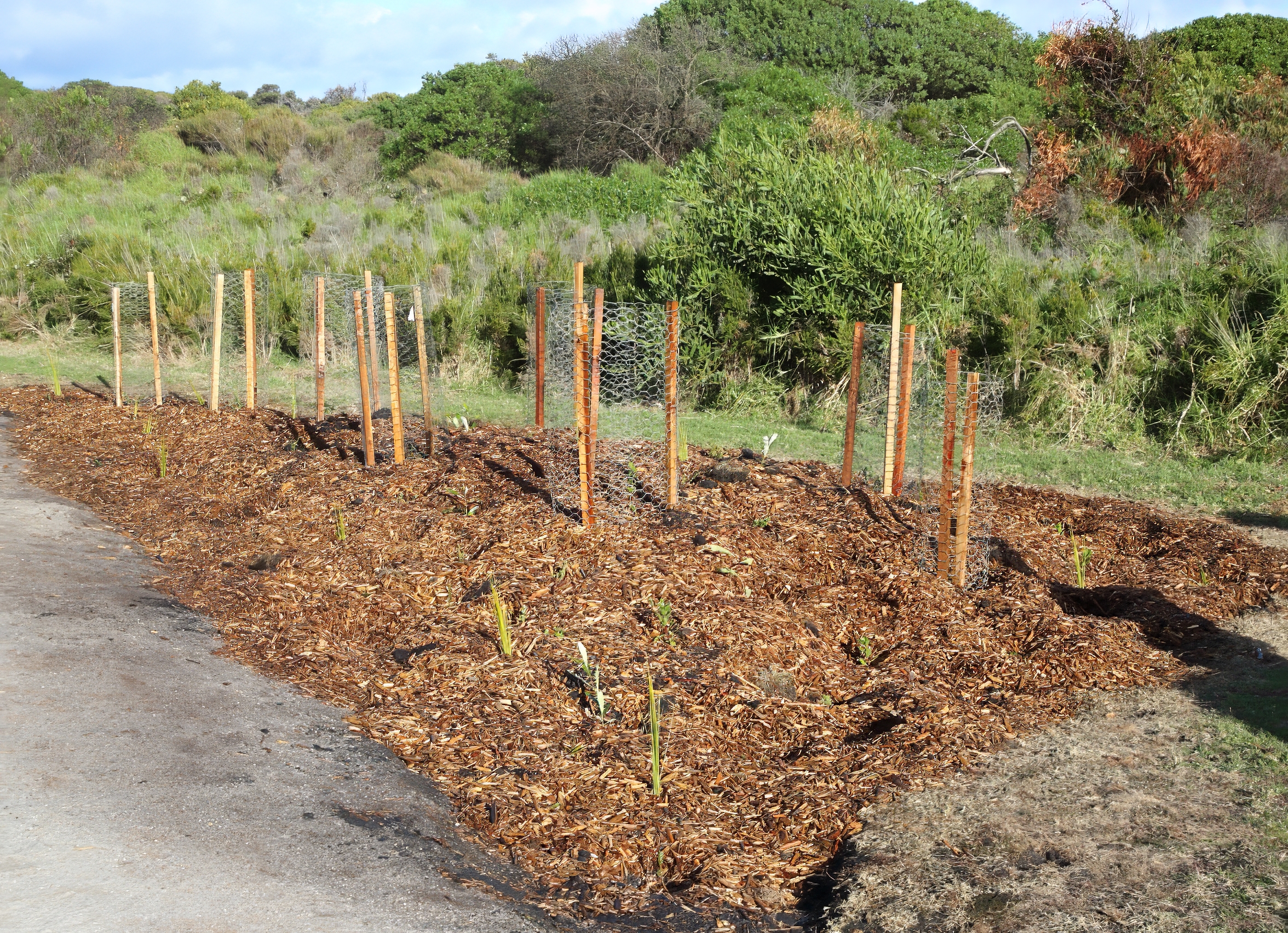
Phase 1 – Community Preparation Day – July 2021
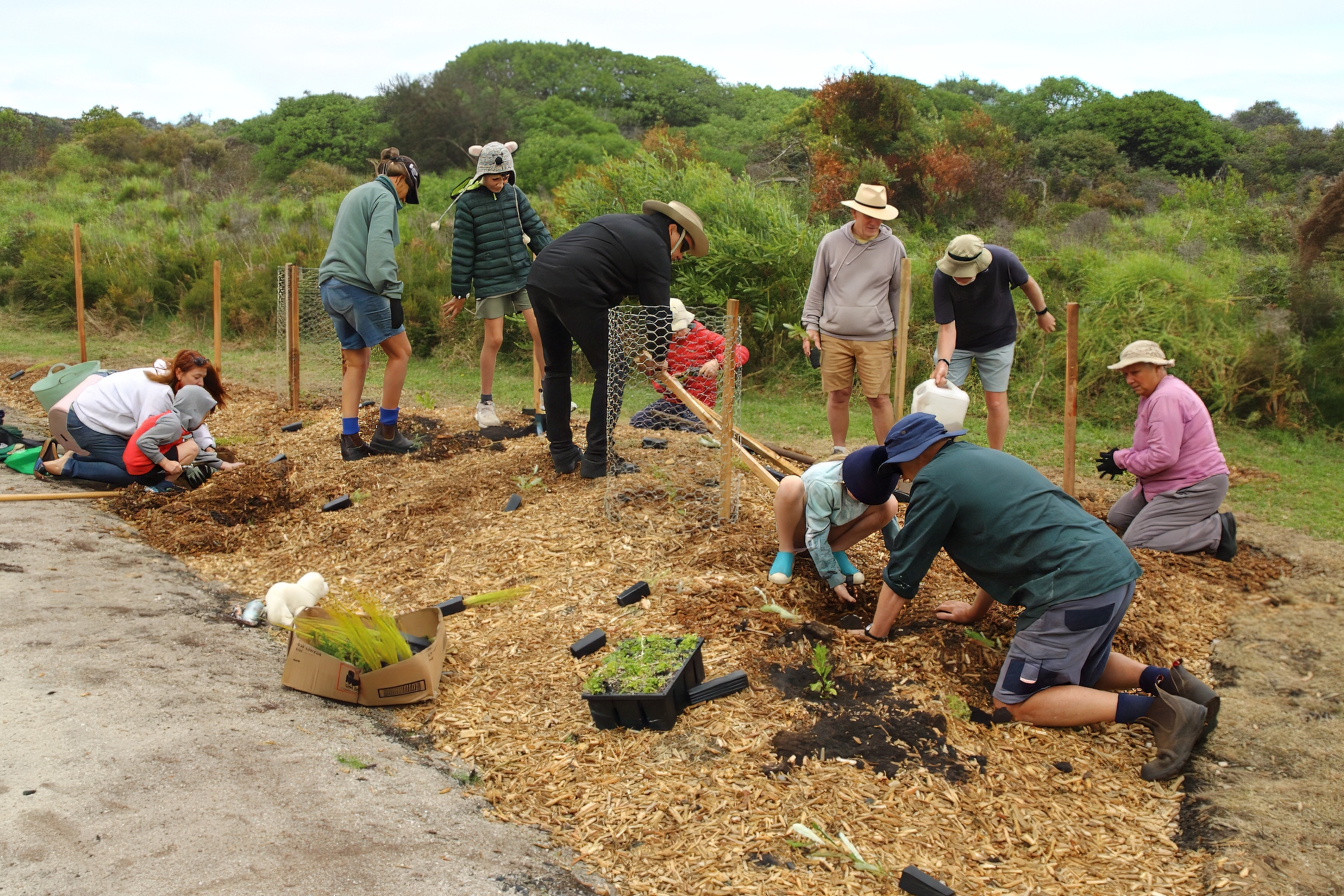
Phase 1 – Community Planting Day – September 2021
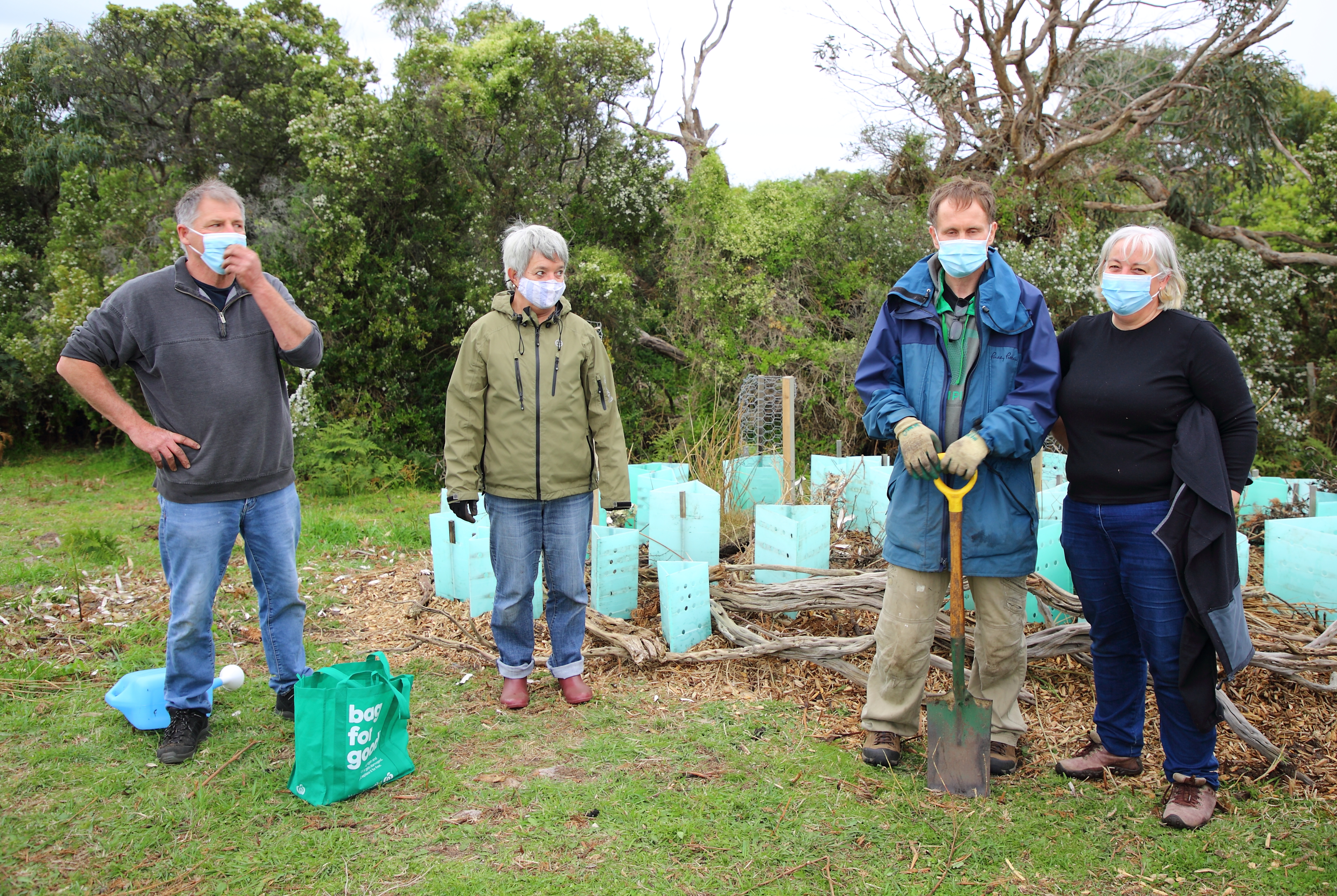
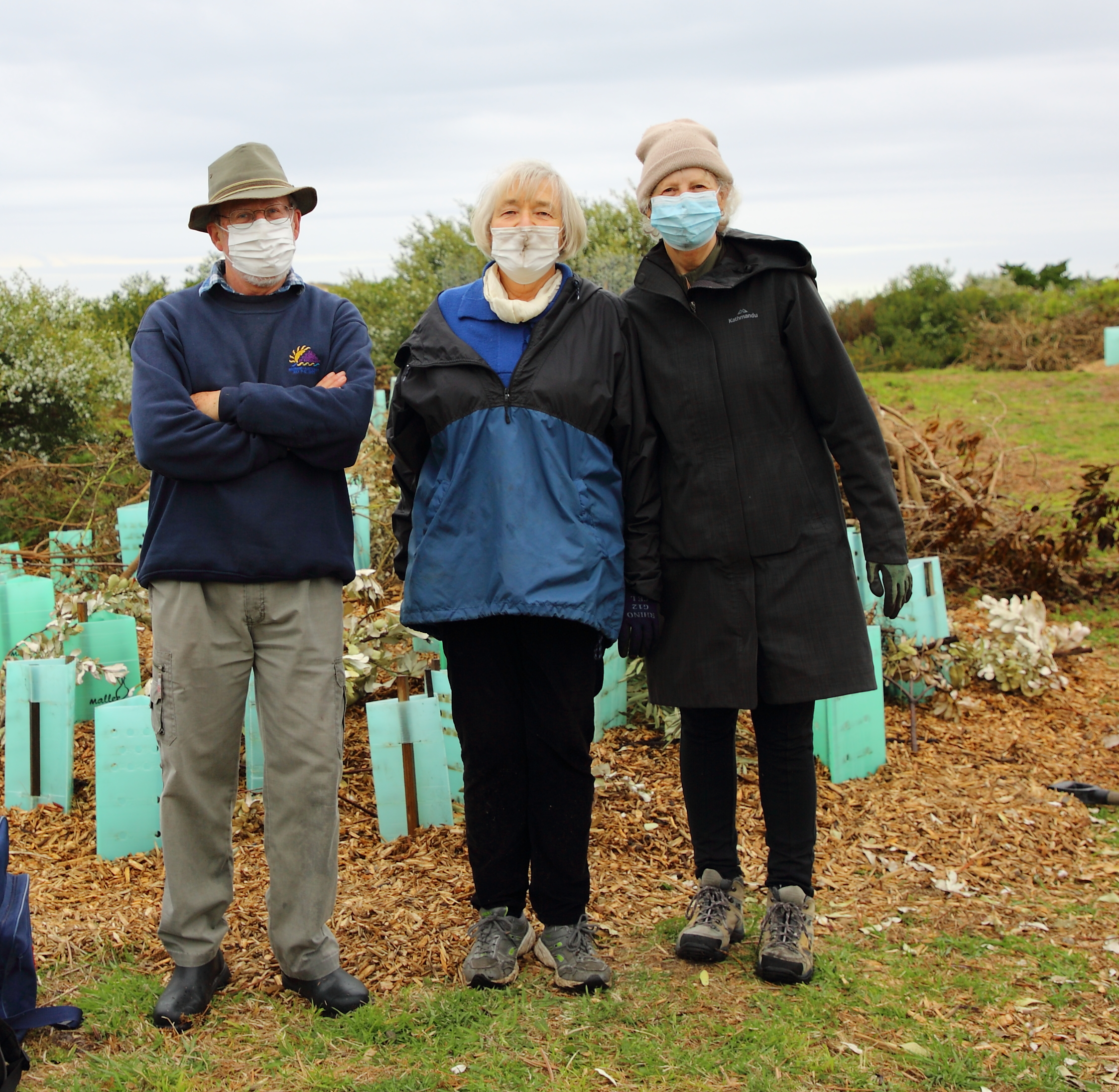
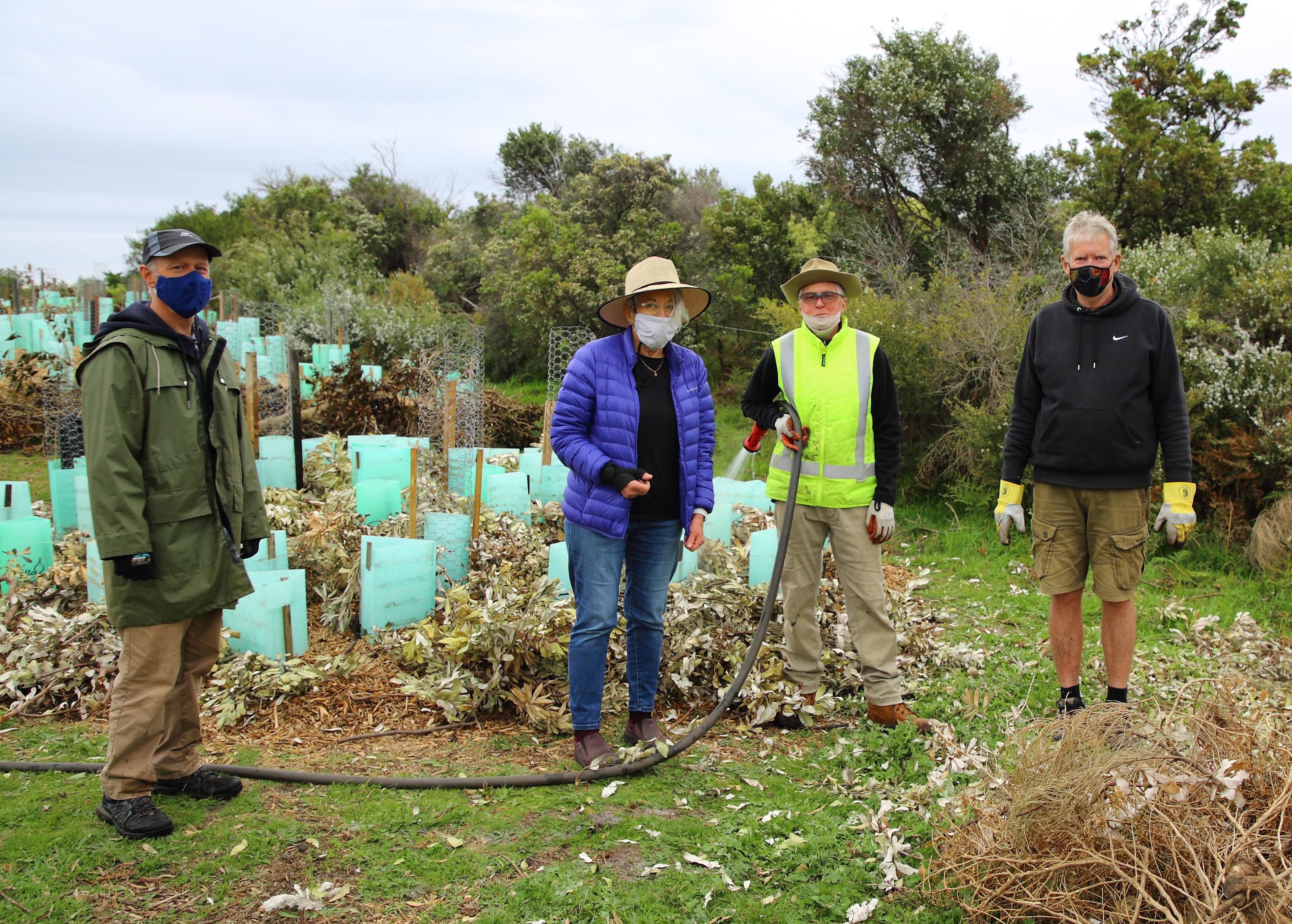
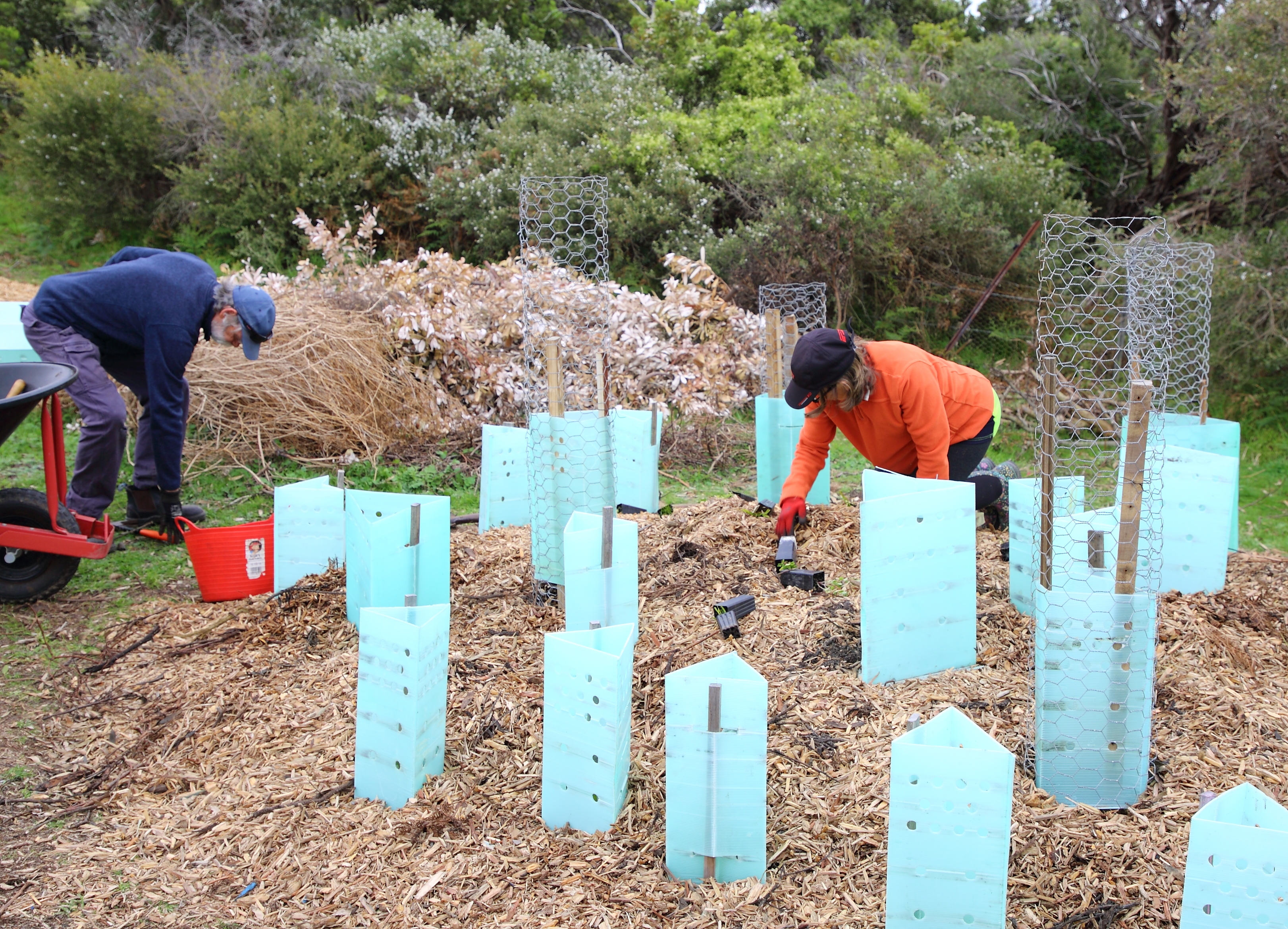
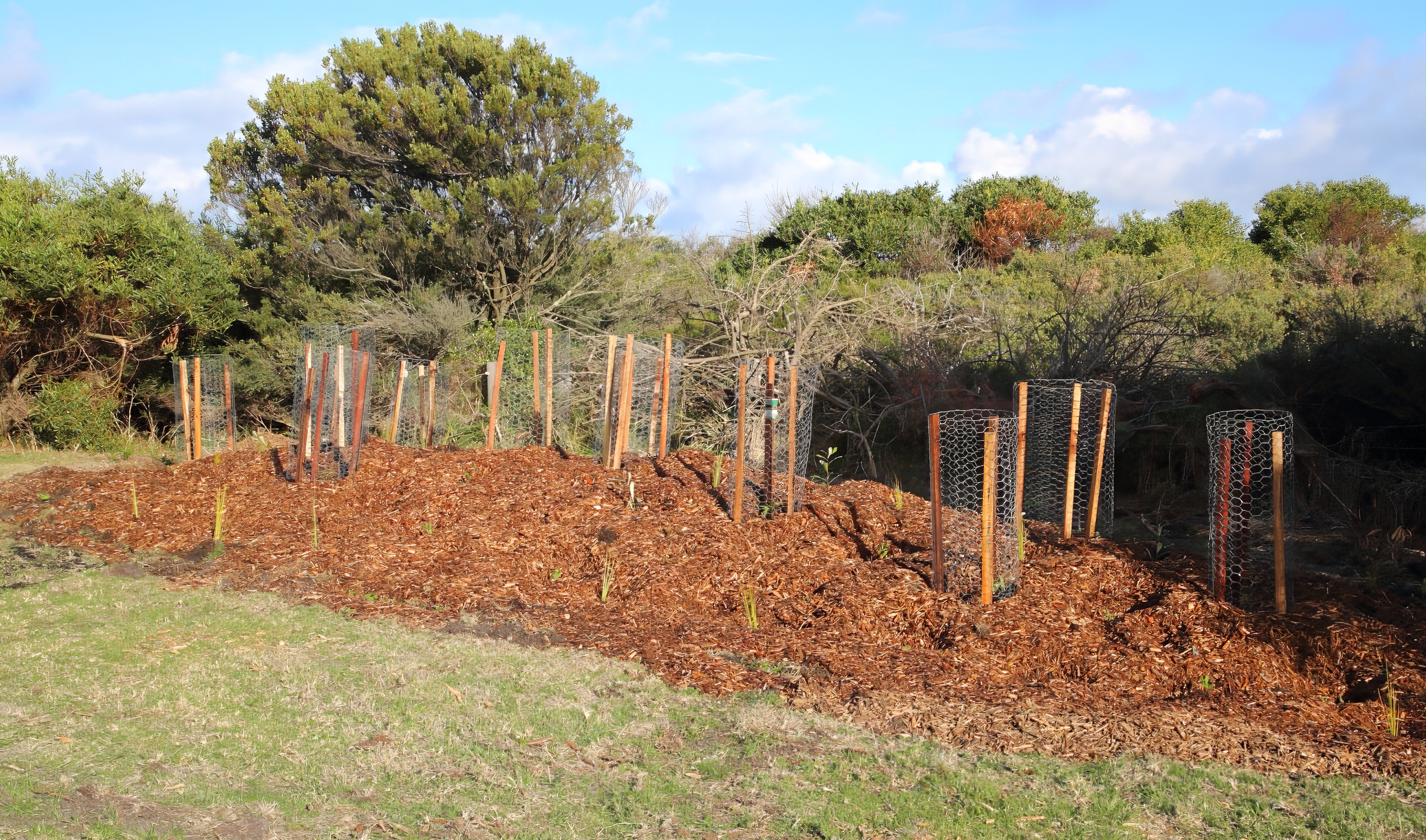
The first community planting of 600 plants in the 12 mini-plots (each of about 44 plants in 12 sq m) was completed by 30 residents and owners over 3 sessions in 6 hours in accordance with then COVID restrictions. All plants were planted in improved soil, fertilised, treated and guarded, with vegetation structure placed among the plots providing further protection and habitat for small fauna and birds. Each plot was then maintained by volunteer custodian(s) until well established (expected to take 2-3 years).

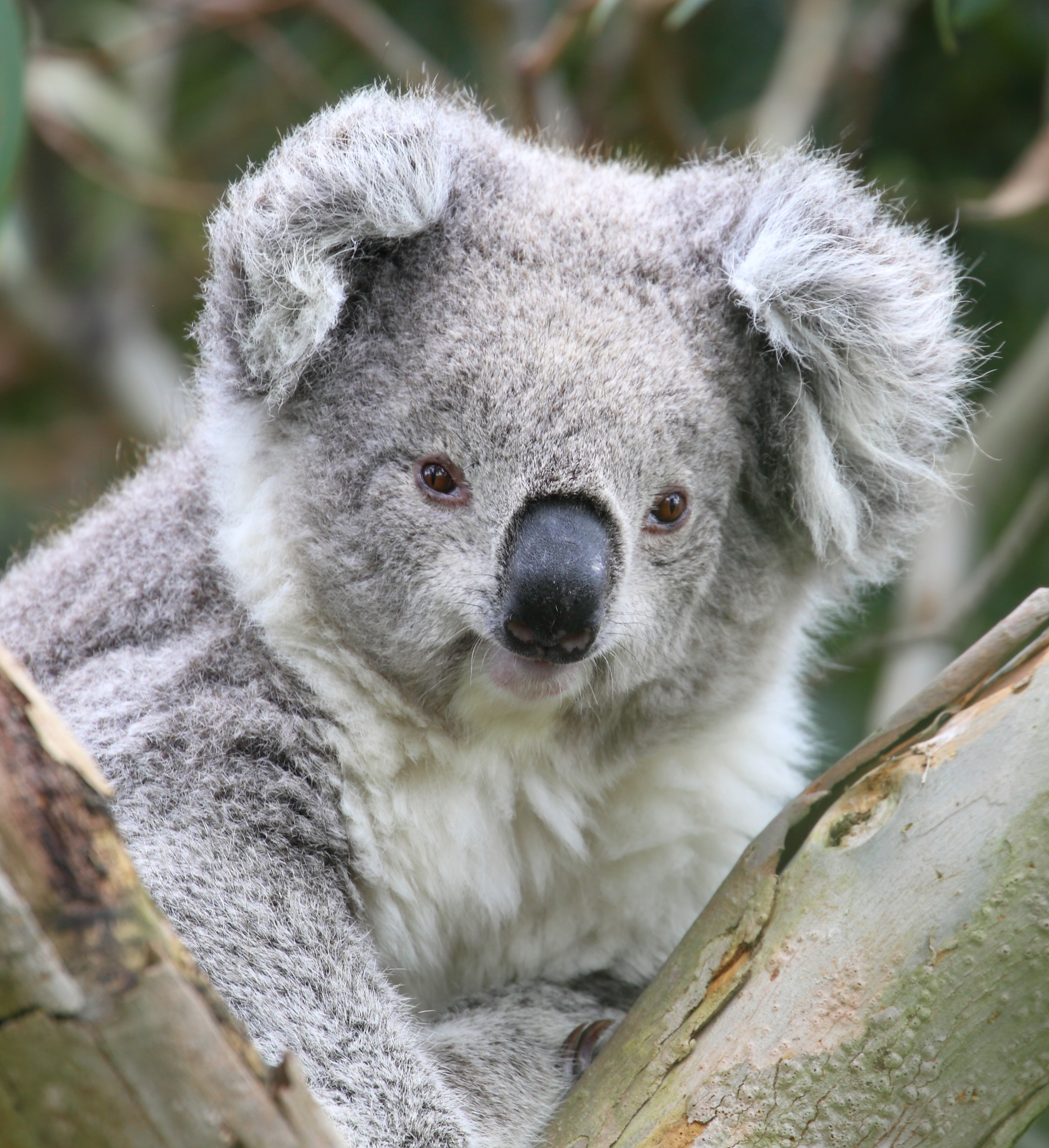
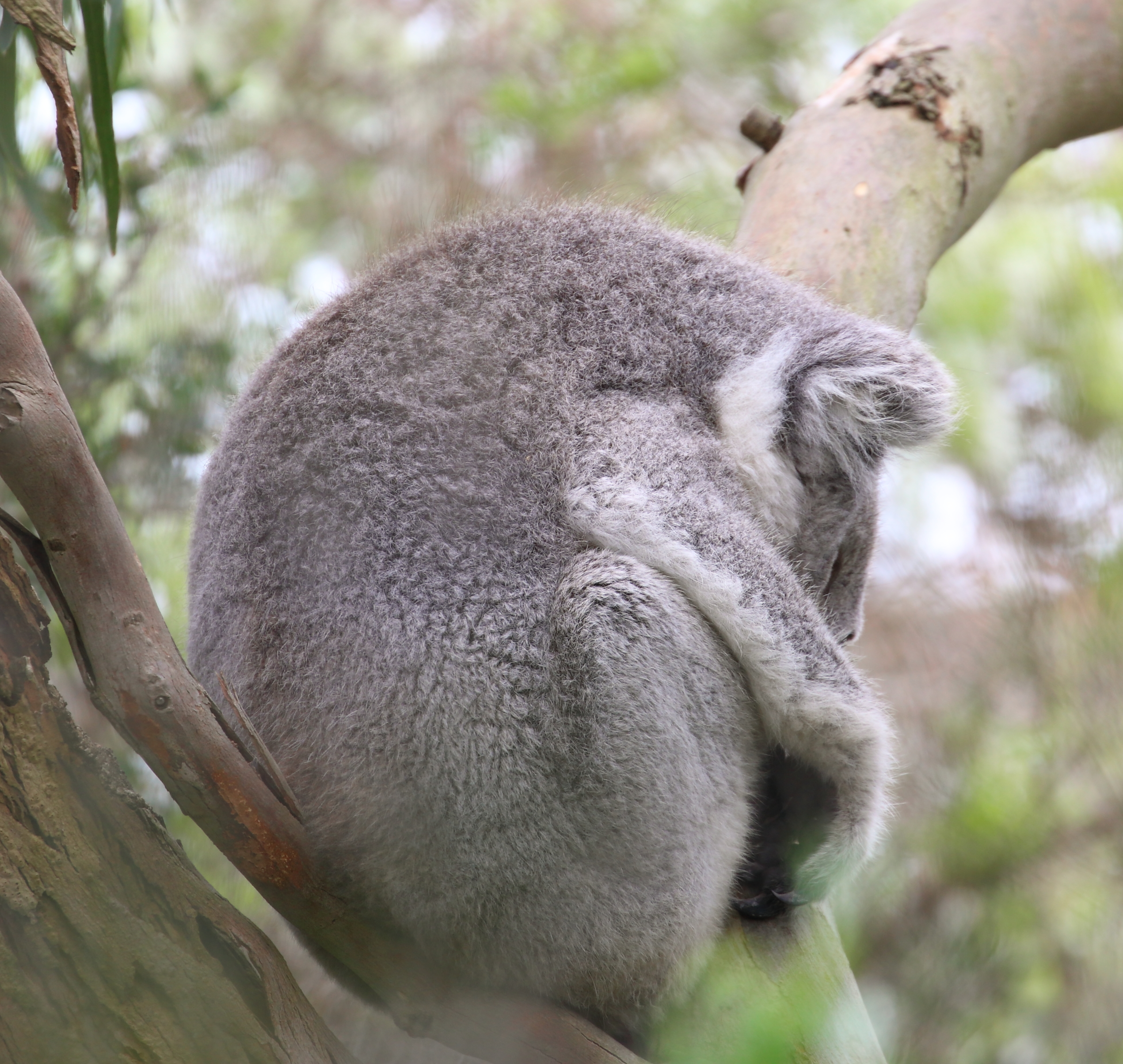
The first Koala visitor in October 2021
A very healthy (… and a bit tired looking) Koala visited the mini-plots for a check and settled into a nearby mature Coastal Manna Gum in mid October 2021. It probably needs to wait a few more years for the plots to develop into a safe habitat with a secure food source!
Phase 1 at year One – the plots in early September 2022
The plants and most of the plots are growing well, particularly those in the more protected areas on the west side of the zone against the thick remnant bush. There has been some damage from rabbits, especially with the grasses and ground covers. Bracken is the dominant weed that continues to require hand weeding. Most of the protective plants guards have been removed from the plants and some custodians have chosen to stake and tie there trees while others are letting them grow naturally without any support.
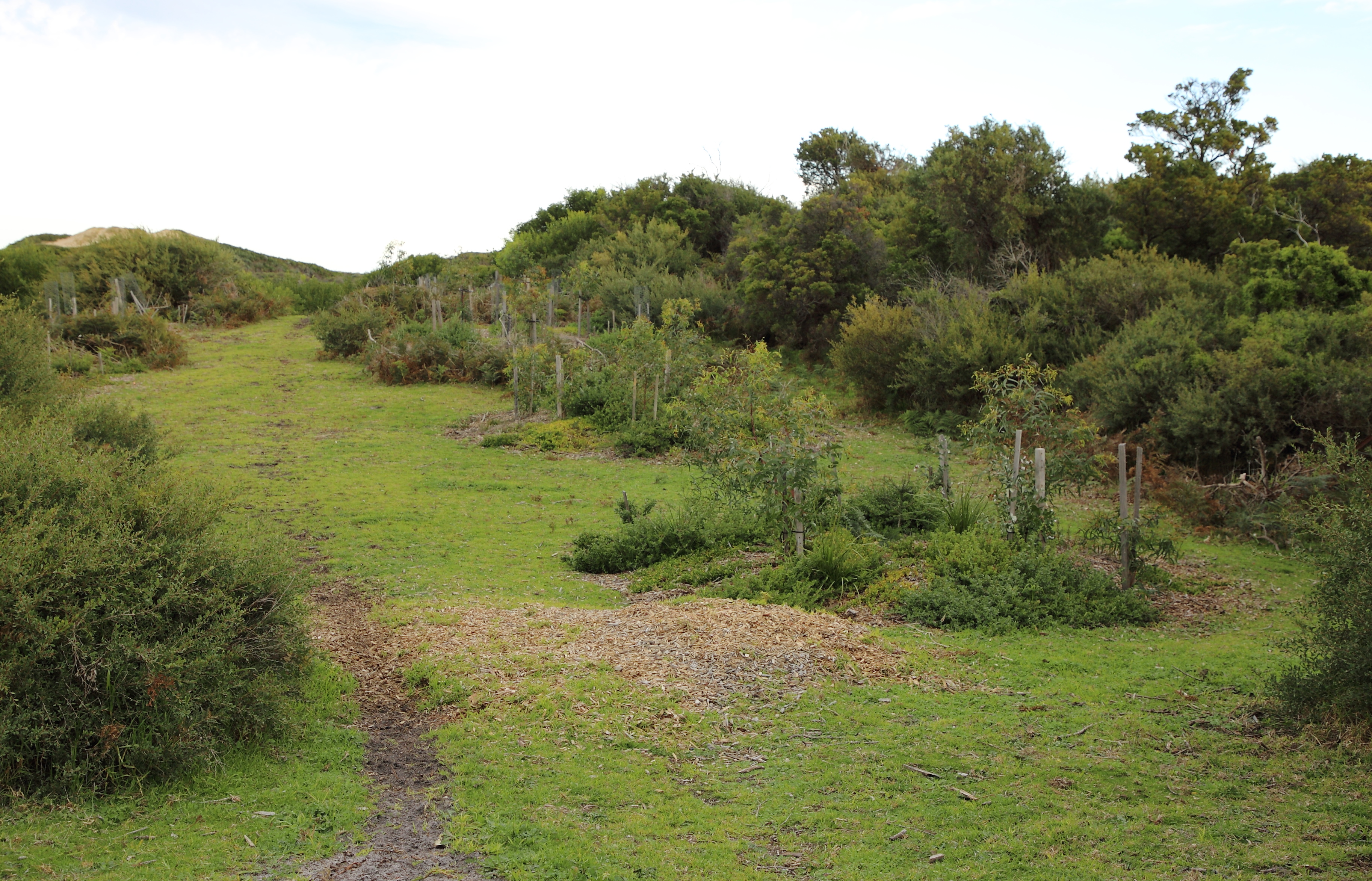
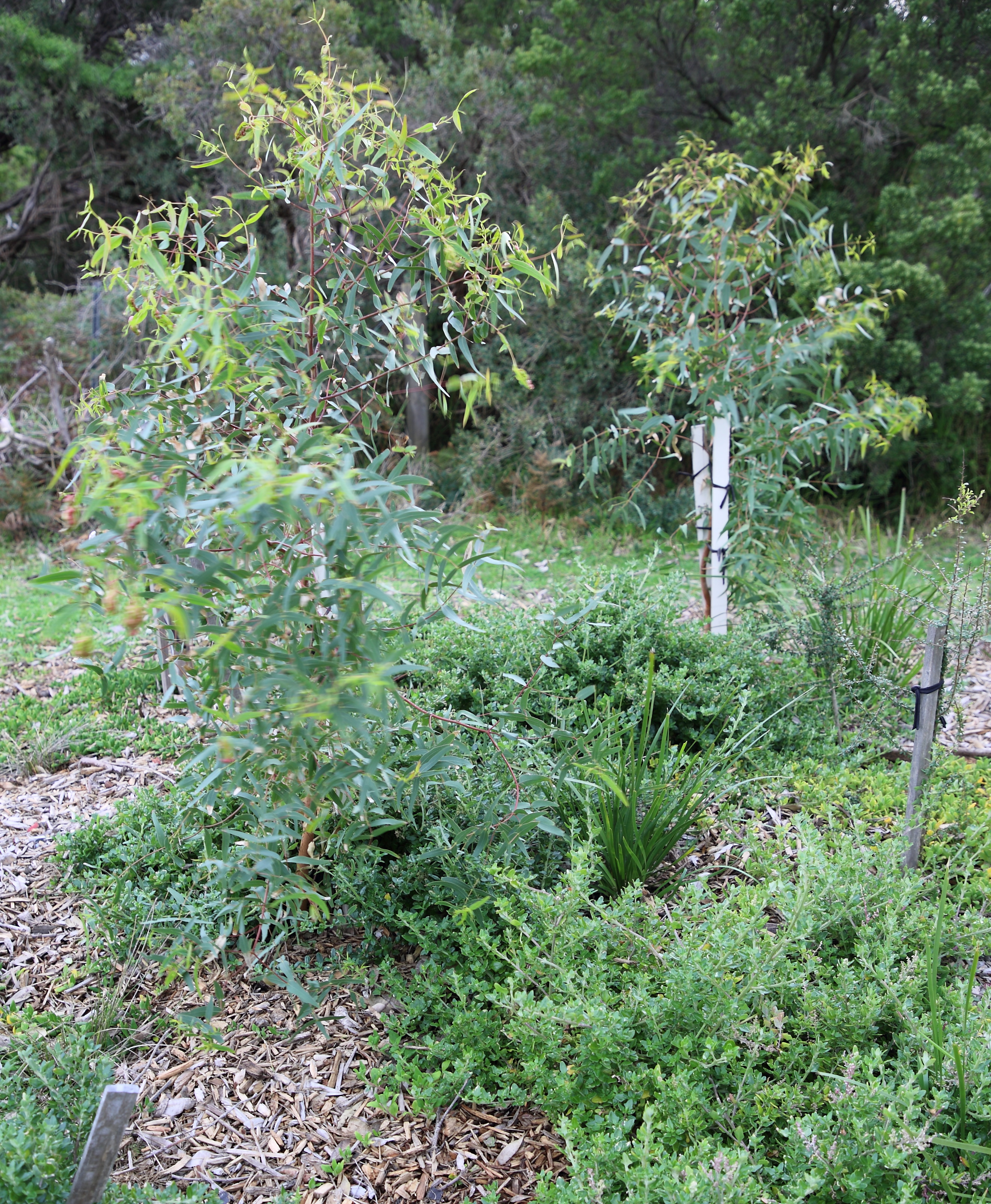
Phase 1 – Two years on – early September 2023
The plots continue to grow well, with those in the more protected areas on the west side against the thick remnant bush reaching fantastic growth and height with the Manna Gum and thick understory growth. Flower buds were seen on a couple of the Manna’s in these plots in May 23. The eastern side exposed plots remain healthy but have more stunted growth – the trees are shorter and more bushy. Most plots have survived rabbit ‘pruning’, while bracken and kikuyu remain the dominant weeds that still require some hand weeding. All the guards have been removed from the plants, some custodians have kept the Manna’s staked while others are letting them grow naturally without any support – these plants are developing a natural lean. Overall plant loss has been minimal.
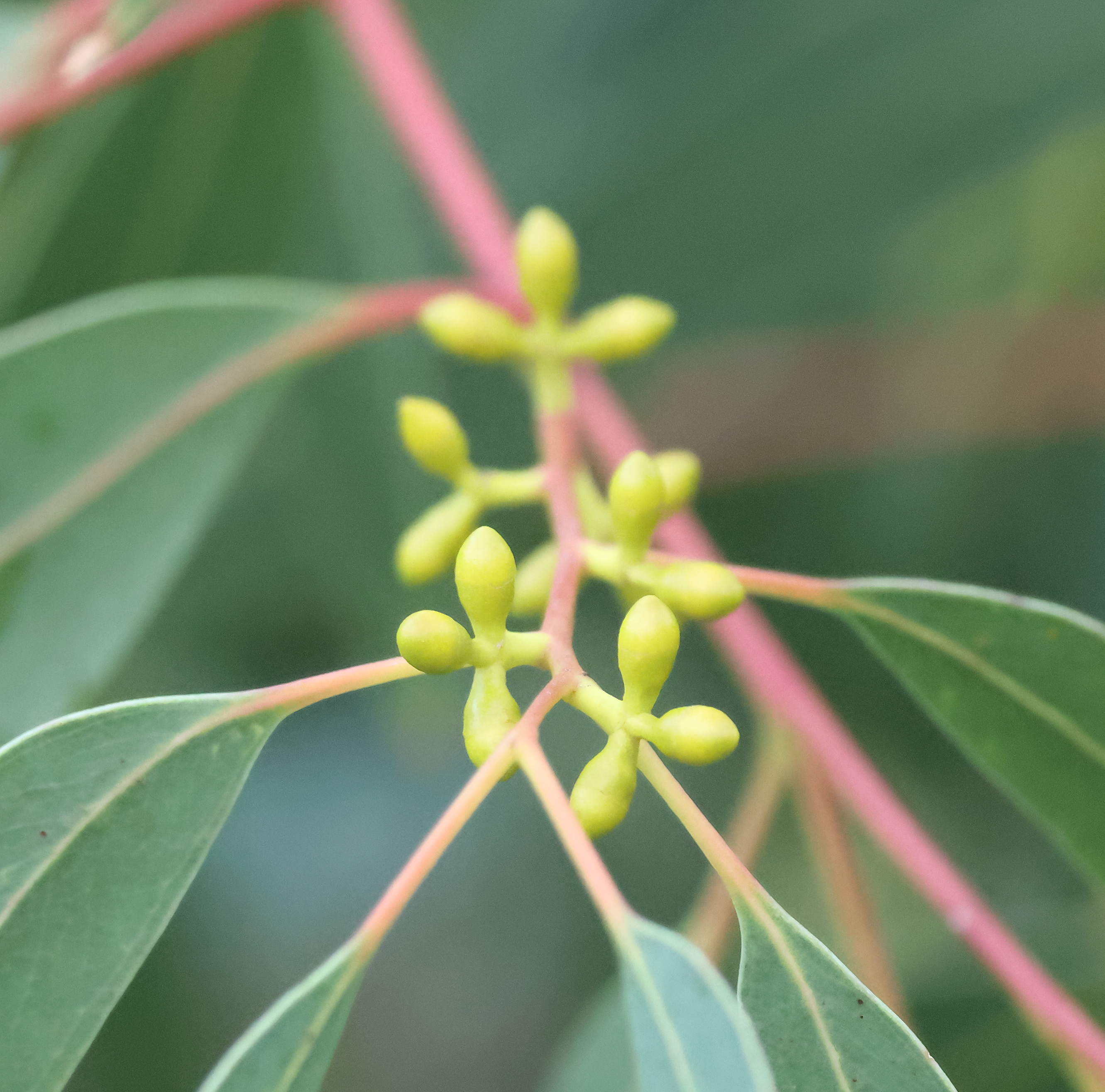
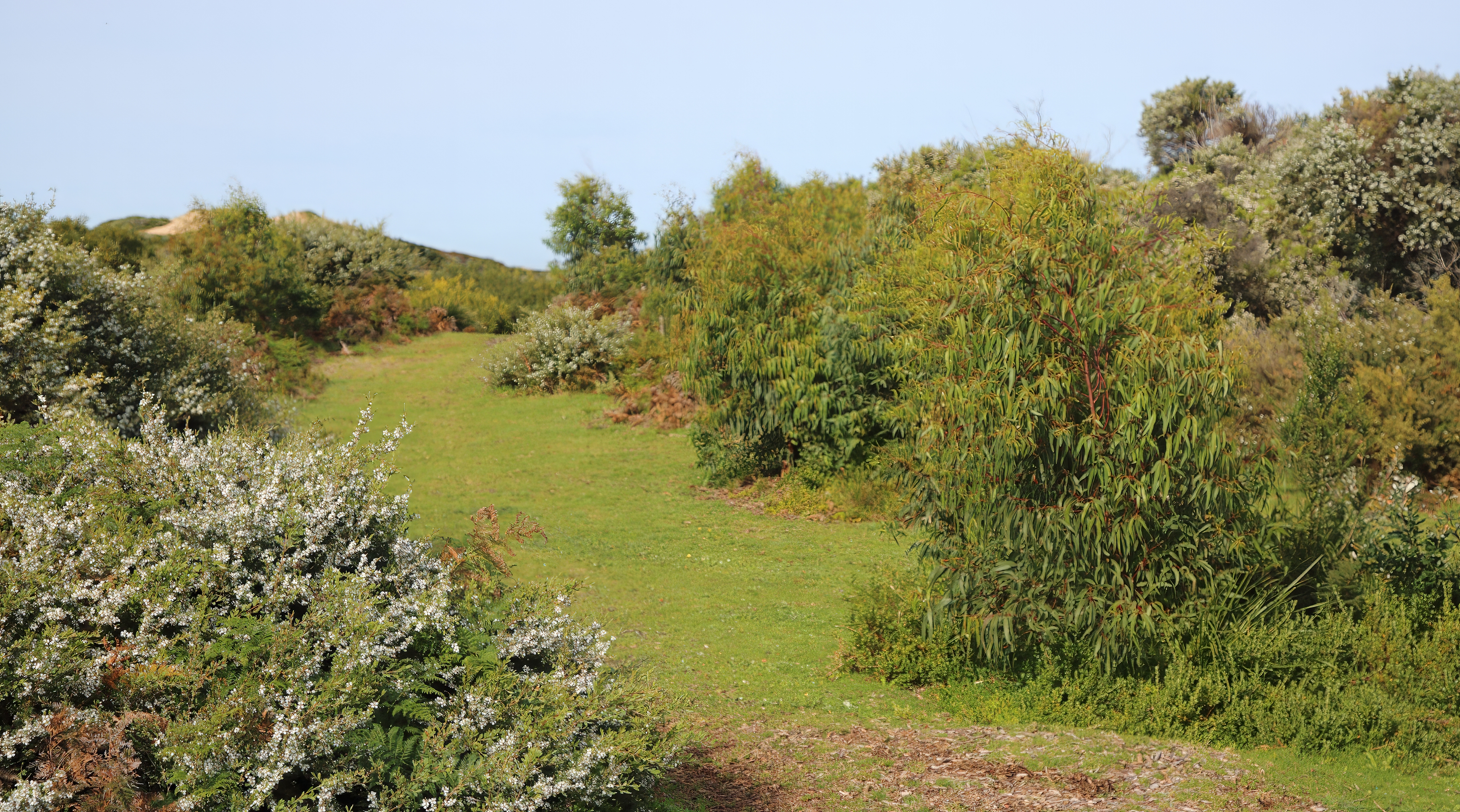
Phase 1 – Thirty months on – March 2024
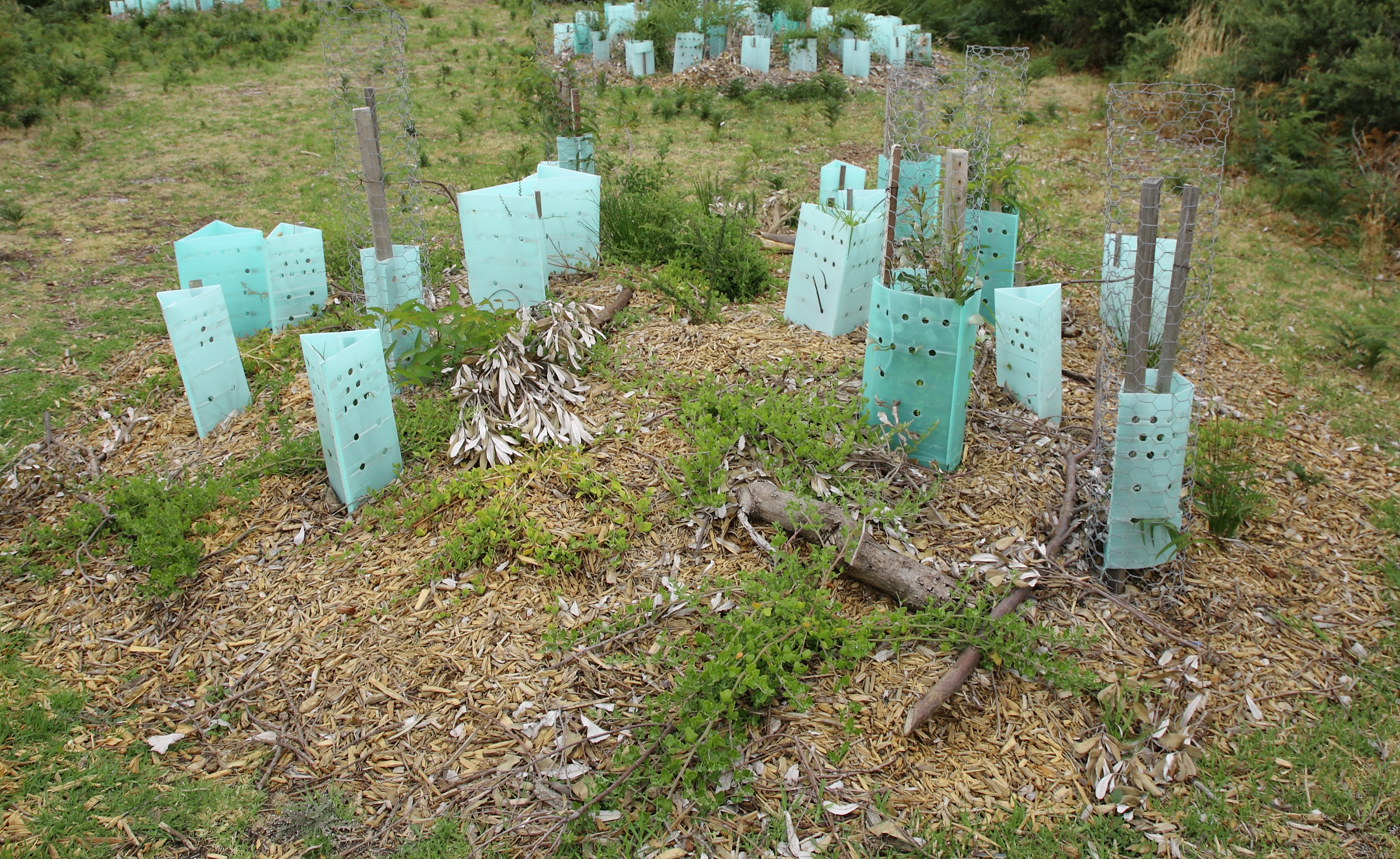
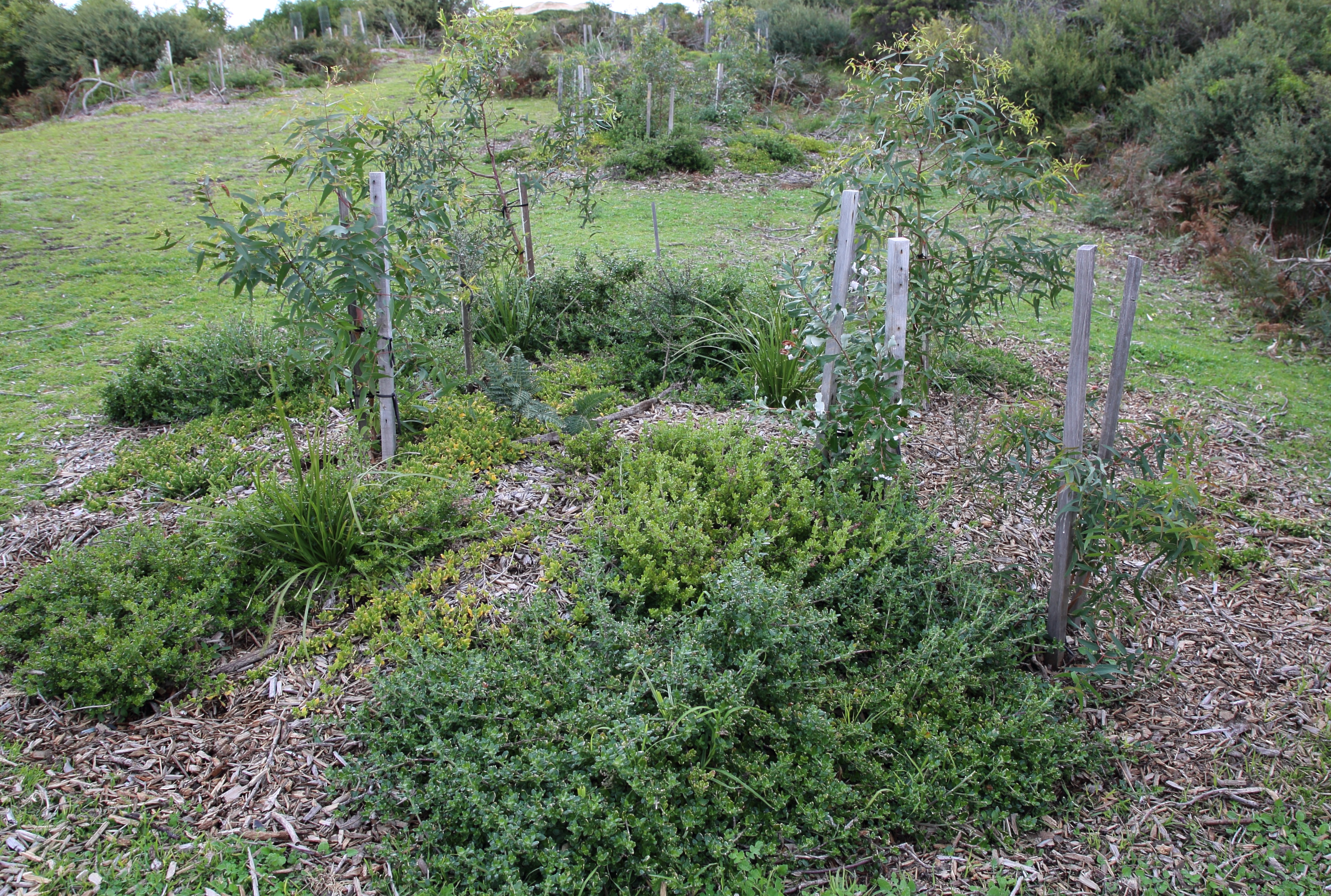
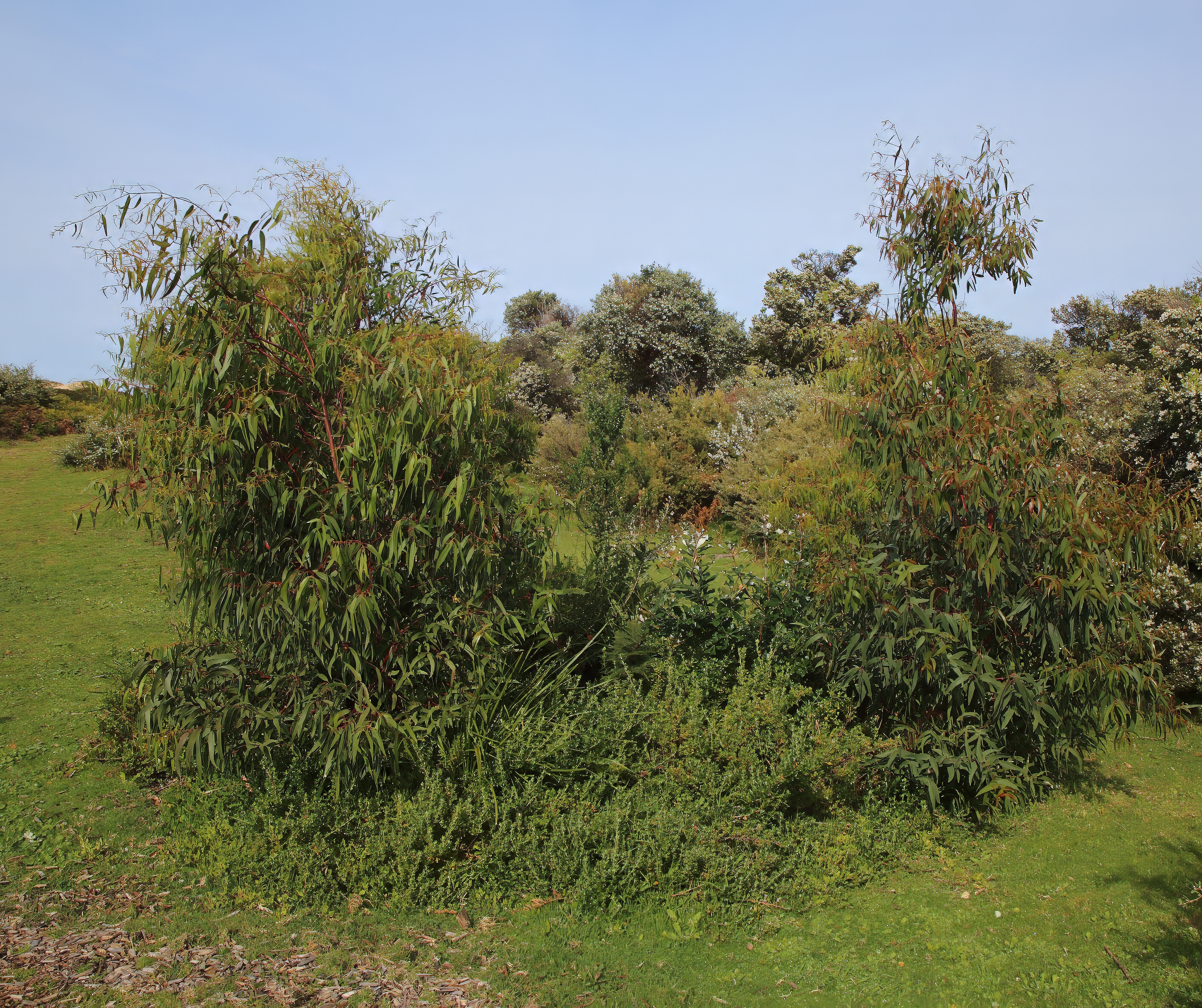
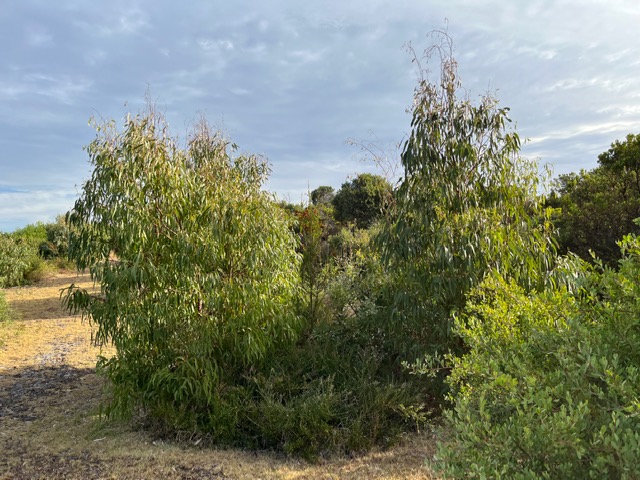
A series of photos showing the development of Plot #9 from inception until March 2024. There has been little plant loss and all plots have developed a thick layer of supporting vegetation creating a lovely little mini-ecosystem of biodiversity.

Phase 1 – Three Years on – September 2024
The Miyawaki methodology behind the plantings was based on compact, layered plantings of ground covers, shrubs and trees in a small area. In essence, it is a planting process which mimics nature along with some human help for the first three years of establishment. The three year mark has arrived. Of the twelve plots established, the ten based on the Miyawaki method compared with two comparison plots (which had variations in planting density and plot size) appear to be a success.
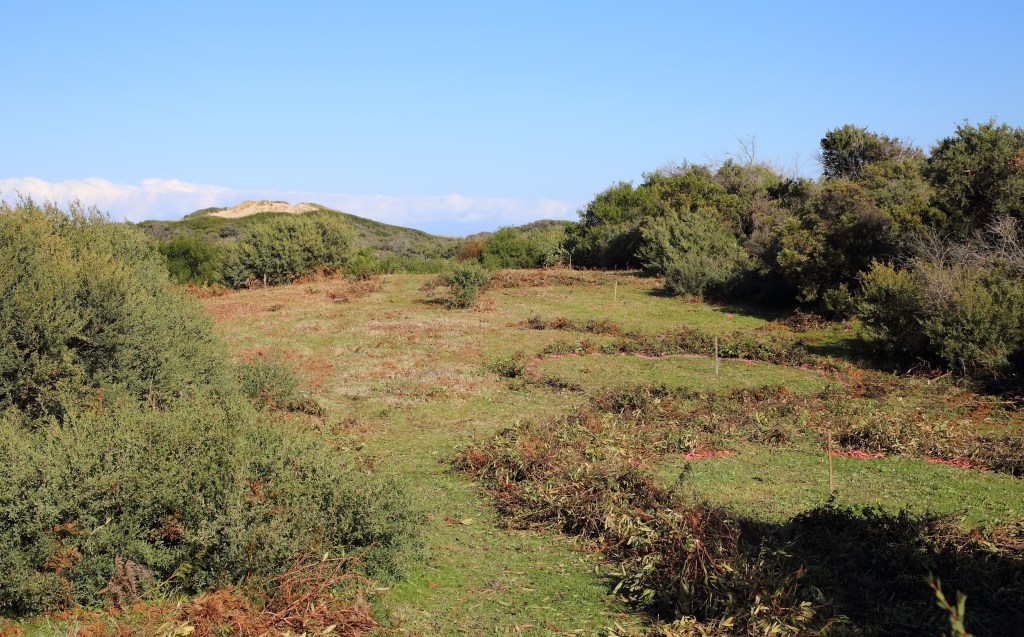
Above: Plots before planting, looking south toward 2nd Surf dune, 8 July 2021.
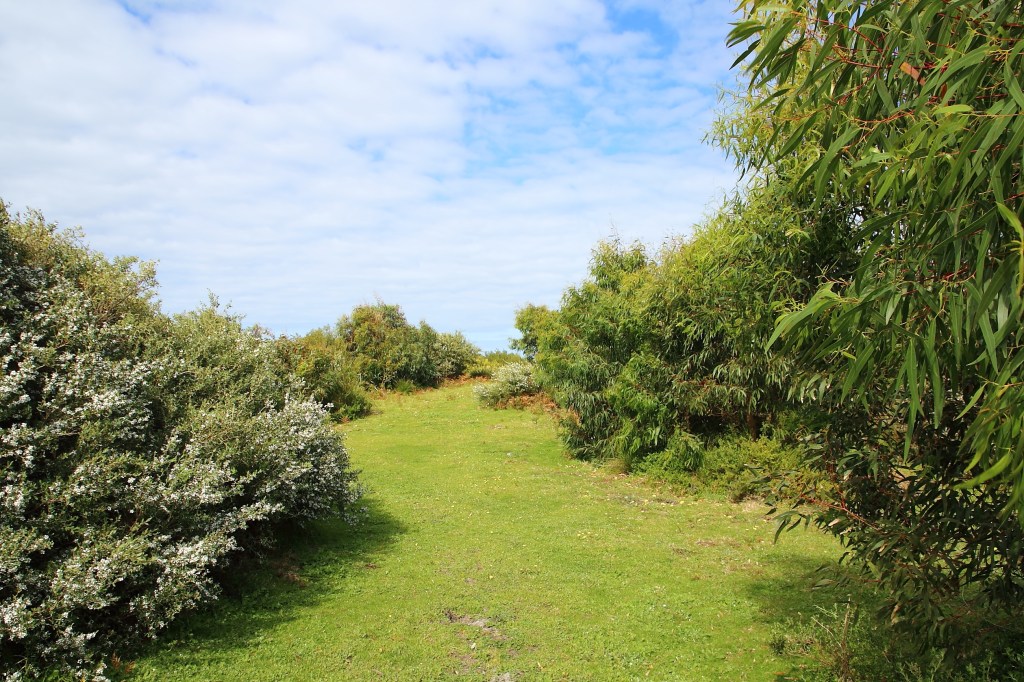
Above: Same view, plots with three year growth, 18 September 2024.
The photo below shows a good example of the compact and layered nature of the plots—a little ecosystem with plants supporting each other in a symbiotic way. The compact, layered nature means the understory has supported the growth of the shrubs and tree species, some which are now at least 3 metres high. The understory of mixed species is also supporting other animal life such as small birds, amphibians, reptiles, invertebrates, microbes and fungi.
The Manna Gums have established very well, and are the tallest species in the photo below. Of the 42 tube stock manna gums planted of the overall 600 plants, 37 remain extremely healthy and are growing vigorously with minimal plant loss. Given we have only eight mature Manna Gum within and near the estate, this potentially creates a significant supplementary food source for the local koala population in the future.
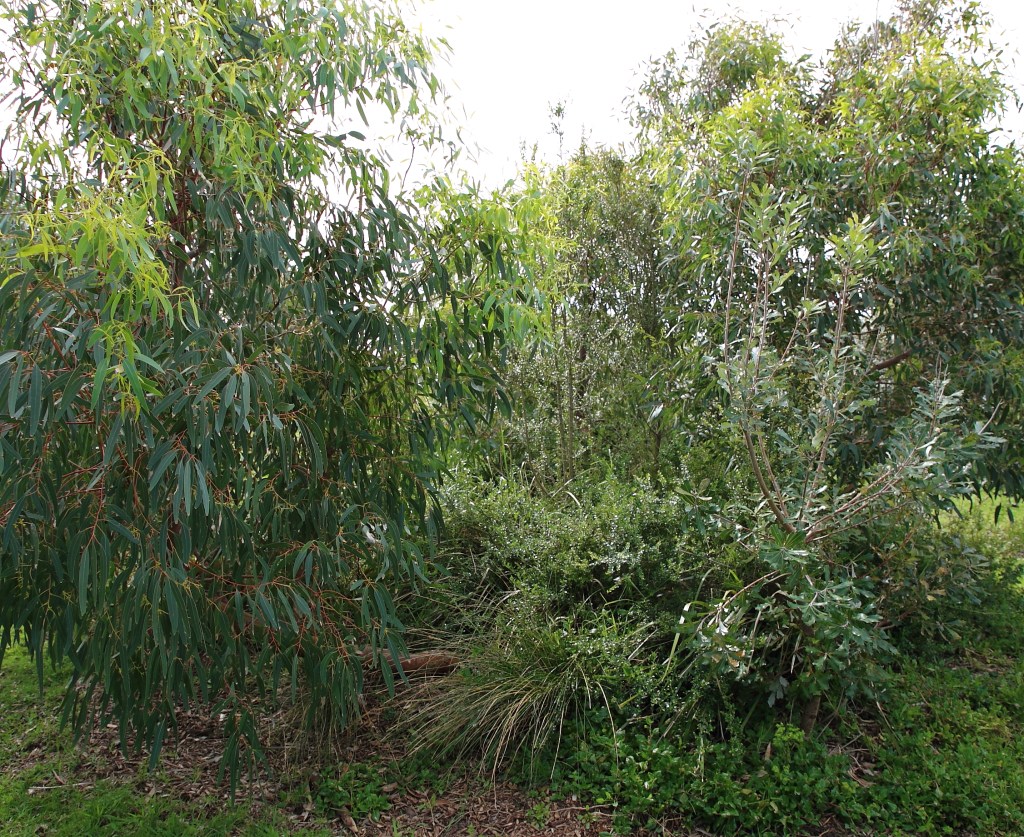
Above: Compact, layered plants from ground covers to trees.
Phase 2 Plantings – April 2024
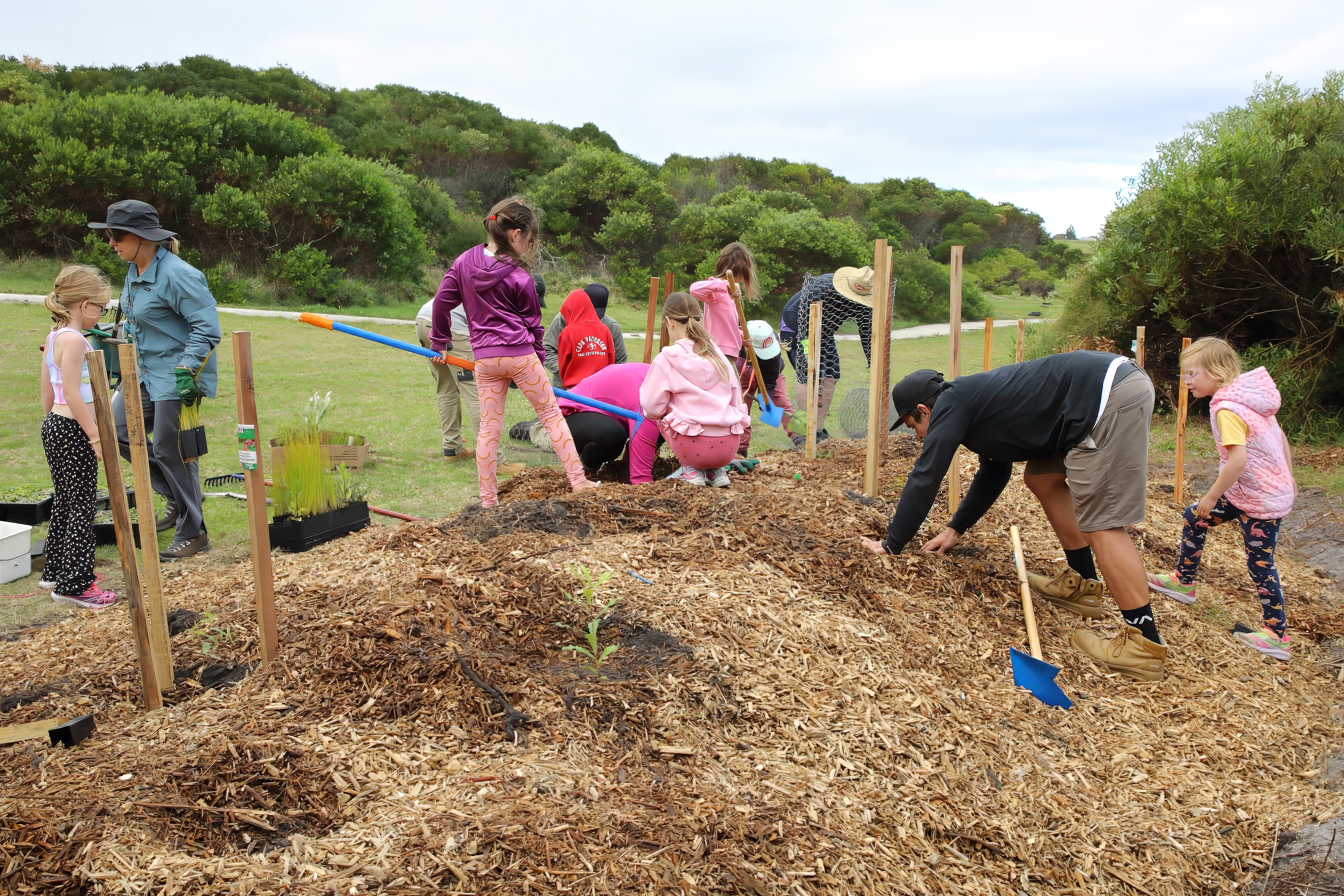
Phase 2 involved the planting of a further five ‘mini-forest’ plots establishing the corridor further west of Phase 1. Two planting sessions were conducted using the same principles of Phase 1. Preparation works were undertaken by The Cape maintenance and landscape team, and over two days, some 50 residents were involved with several family groups with many enthusiastic children involved. Another 300 plants using the eight indigenous species of Phase 1 were planted out. All the Coastal Manna Gum tube stock were from collected seed of an old, on-site Manna Gum near the Phase 1 plots and grown up in the propagation house of The Cape Community Farm. Other plants were sourced from local nurseries.


 Cape Chatter